Center for Life Ethics
Schaumburg-Lippe-Straße 7
D-53113 Bonn
Center for Life Ethics
Schaumburg-Lippe-Straße 7
D-53113 Bonn
Leverage points are places in a system where a small shift may lead to fundamental changes in the system as a whole. According to the original concept developed by Donella Meadows, there is a hierarchy of leverage points with increasing systemic depth at which a system can be intervened – from shallow to deeper leverage points which have a greater potential to bring about transformative change but which are often neglected in research. The system thinking lens provided by the leverage points concept can help to holistically analyze adaptation, mitigation and transformation pathways for its potential to foster sustainability and resilience and by considering the synergies and trade-offs between different targets.
This DFG network brings together early career scholars in Germany to exchange research approaches, synthesize existing research, and to develop agendas for future research around three core areas: (1) Re-Connect, (2) Re-Structure, (3) Re-Think.
(1) Re-Connect focuses on fostering material and non-material interlinkages between humans and nature. The non-material contributions of nature to people are a central aspect of human wellbeing. This includes a focus on values in transformation, and how values influence (perceived) options for action.
(2) Re-Structure is concerned with institutional reform, collapse and renewal, including measures targeting systemic and structural changes. Institutions (including lack of them) are the rules, norms, social and decision-making structures that exist in society and guide actions.
(3) Re-Think emphasizes the need for knowledge co-production, especially through transdisciplinary processes. Western knowledge systems, which often form the basis of (inter)national top-down interventions, can reproduce systemic problems, especially in the Global South, instead of resolving them. Re-thinking – for example, how community and place-based knowledge can open up new intervention points for sustainability transformation.
Schwerpunkt "Transformation und Governance"
Center for Life Ethics
Schaumburg-Lippe-Straße 7
53113 Bonn
Prof. Dr. Maraja Riechers (Thünen Institute of Baltic Sea Fisheries)
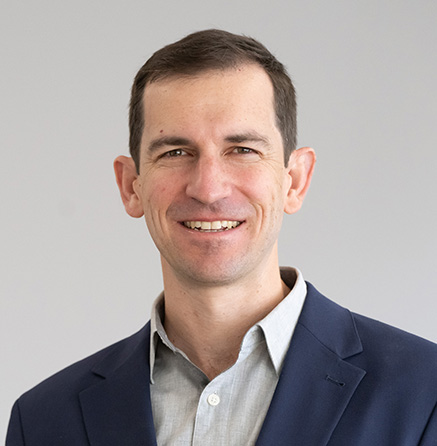
Dr. Jan Petzhold (LMU Munich)
Prof. Dr. Maraja Riechers (Thünen Institute of Baltic Sea Fisheries)
Dr. Jan Petzhold (LMU Munich)
DFG Research Network
Up-to-date information in our newsletter